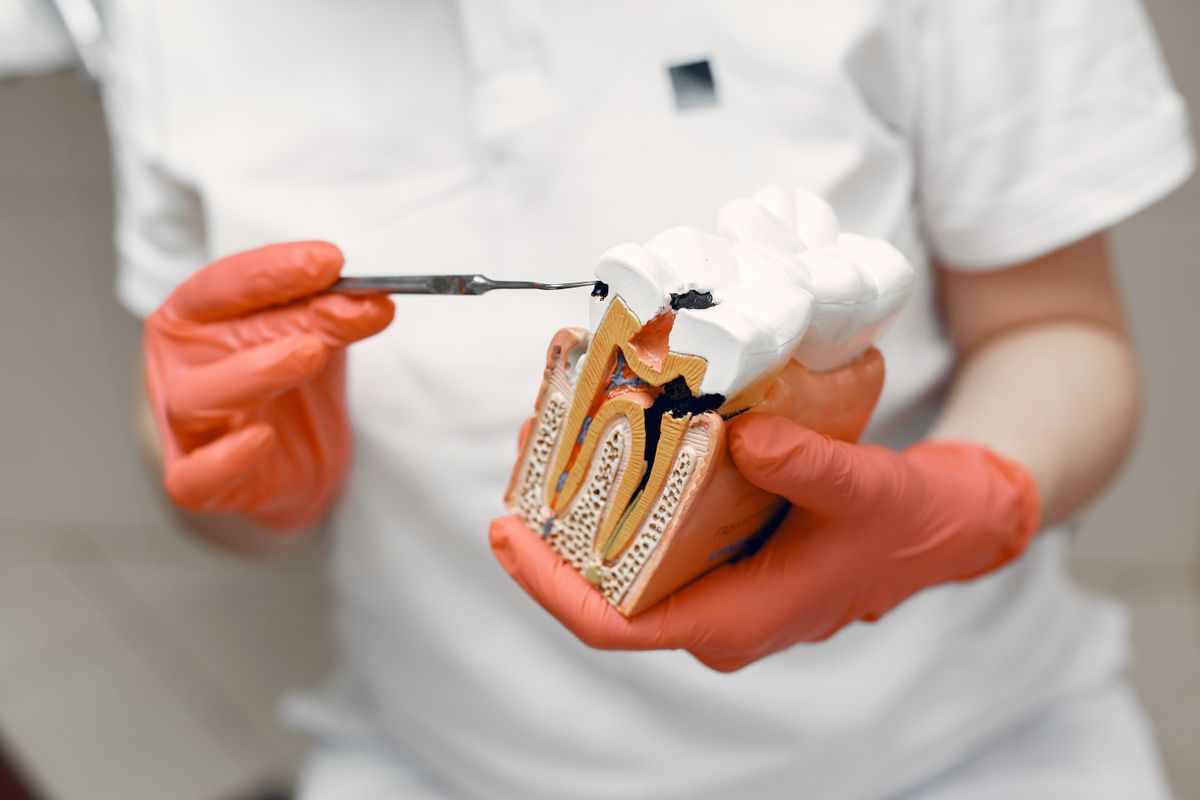

Signs you may need a root canal
- Severe toothache, especially when chewing or at night
- Lingering sensitivity to hot or cold that aches after the trigger is gone
- A darkened or discoloured tooth
- Swelling or a pimple-like bump on the gum near a tooth
- A cracked, chipped, or previously traumatized tooth
An infected tooth never heals on its own — and waiting risks an abscess, facial swelling, and eventually losing the tooth. If you have any of these symptoms, contact us promptly.
What actually happens during a root canal
Complete numbing
We don't start until the tooth is profoundly numb. Anxious? Nitrous oxide or oral sedation can make the visit genuinely relaxed.
Removing the infection
Through a small opening, the inflamed nerve tissue is removed and the canals are cleaned and disinfected.
Sealing the tooth
The canals are filled and sealed to prevent re-infection.
Protecting it long-term
Most back teeth need a crown afterwards to restore full strength.
Why save the tooth?
Nothing we can make is quite as good as the tooth you grew. A successfully treated tooth can last a lifetime, maintains your bite and bone, and is usually more economical than extracting and replacing it. When a tooth truly can't be saved, we'll tell you honestly and plan the best replacement.